About Orchard Lab
Orchard Lab is an independent fruit-tree resource created by Daniel Dick, a Michigan tree-fruit horticulturist, researcher, educator, and fifth-generation fruit grower.
The site grew from years spent working in orchards, conducting field research, analyzing agricultural data, and helping people understand what their trees are doing. It brings together practical articles, diagnostic photographs, decision-support tools, field observations, and technical resources for people who grow fruit.
Orchards are biological systems shaped by weather, history, management, and chance. Orchard Lab is a place to examine those systems carefully and make their behavior easier to understand.
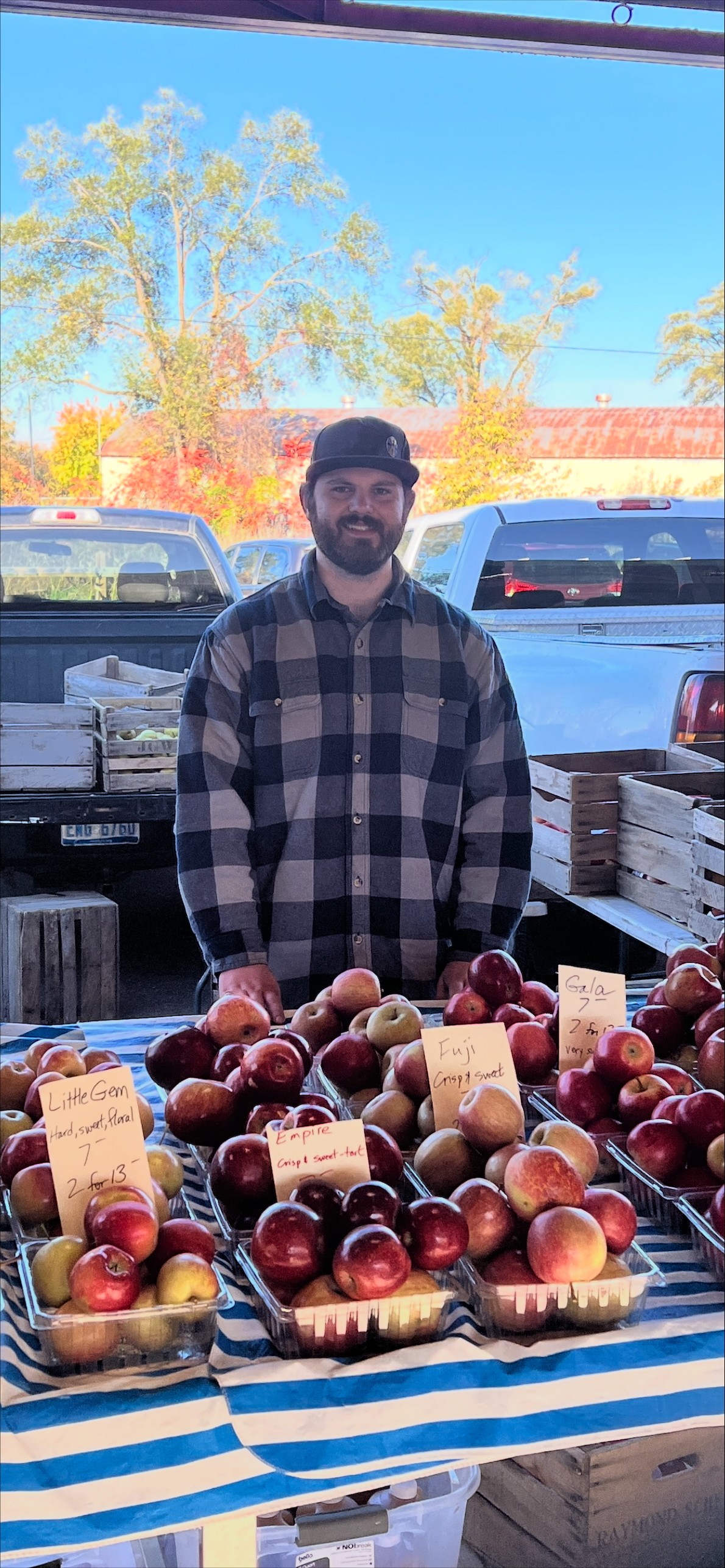
Who I Am
I’m Daniel Dick. My work with fruit trees sits between research, commercial production, and the everyday decisions made in an orchard.
I focus on apple, peach, pear, and cherry production, along with tree physiology, fruit quality, crop load management, practical orchard measurements, and decision tools that help growers interpret what they see in the field.
Working as both a horticulturist and a fruit grower shapes how I approach these subjects. A recommendation must make biological sense, but it must also work within the realities of time, labor, equipment, cost, and uncertainty.
How Orchard Lab Tools Are Built
Orchard Lab calculators and decision aids follow a consistent editorial method:
- Assumptions are stated on the page, not hidden in the code.
- Equations and units are documented so you can verify the math.
- Worked examples are tested against the calculator output.
- Tools are updated when errors or better information are identified.
- Results are educational calculations — not pesticide-label, legal, or product recommendations.
Why I Built Orchard Lab
People describe fruit-tree problems in different ways.
A homeowner may ask why an apple has spots. A commercial grower may ask how recent weather has changed disease risk. Someone planting a few trees may need help choosing a cultivar, while an experienced orchardist may need a faster way to calculate acreage, spray volume, or degree-day accumulation.
These questions differ in scale, but they begin with the same task: observing a tree and trying to interpret what happened.
Orchard Lab was built to make that process easier. Its purpose is to organize useful orchard knowledge into clear explanations, photographs, tools, and field notes that people can apply to real trees and real decisions.
How I Approach Orchard Problems
Fruit-tree problems rarely have a single cause.
A leaf spot may reflect weather conditions, cultivar susceptibility, infection timing, canopy density, sanitation, spray coverage, or the history of the site. A poor crop may involve frost, pollination, winter injury, crop load, tree vigor, disease, insects, or several smaller stresses occurring together.
Understanding an orchard therefore requires more than identifying a symptom. It requires reconstructing the sequence of events that produced it.
Orchard Lab follows that approach. Each resource should help answer three questions:
- What is happening?
- Why is it happening?
- What should be examined or measured next?
The aim is to support better observation and better reasoning, especially when the available information is incomplete.
Independence and Practical Limits
Orchard Lab is independently created and maintained. It is not an official university or government website. Its content is intended for education, problem-solving, and practical reference.
Fruit-tree management decisions depend on crop, cultivar, growth stage, weather, site history, equipment, pesticide labels, and local regulations. Information on this site cannot account for every orchard or situation.
Always read and follow the current pesticide label, observe applicable regulations, and verify significant management decisions using appropriate local or site-specific expertise.